
INTRODUCTION
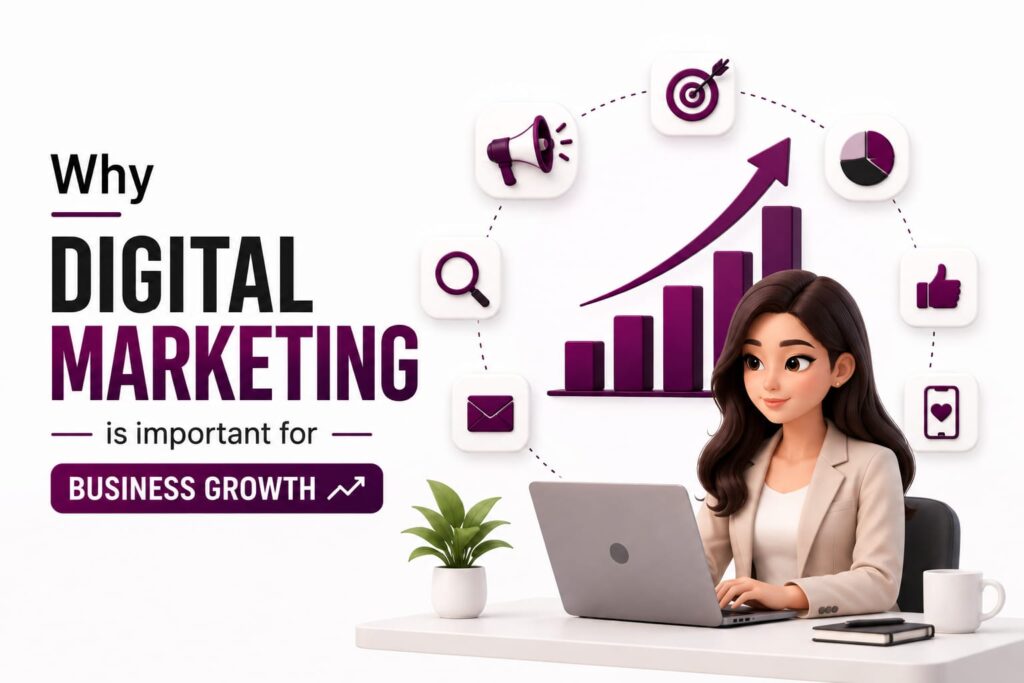
In today’s digital environment, offering a good product or service alone isn’t sufficient. Customers often look for information online before deciding to buy, which makes digital marketing a crucial component for any business that wants to succeed. Whether you are a new business, a small local company, or a big organization, digital marketing allows you to connect with the right people, build recognition for your brand, and boost your sales. Now let’s see Why Digital Marketing is Important for Business growth.
What is Digital Marketing?
Digital Marketing refers to the promotion of products or services through online platforms such as search engines, social media sites, websites, email, and online ads. It differs from traditional marketing by allowing businesses to target specific groups of people and monitor how well their campaigns are performing in real time.
Since Digital Marketing is important for Business growth, businesses use the following digital marketing strategies to increase visibility, attract customers, and improve sales:
Search Engine Optimization (SEO)
Social Media Marketing (SMM)
Search Engine Marketing (SEM)
Content Marketing
Email Marketing
Pay-Per-Click (PPC) Advertising
These approaches work together to enhance visibility online and support business growth.
Digital Marketing is important for Business growth because it helps businesses reach the right audience, build brand awareness, generate quality leads, and increase sales. Here are the key reasons why digital marketing is important for business growth:
1. Reaching the Right Audience
Digital Marketing is important for Business growth because it enables businesses to reach the right audience. By using data such as location, age, interests, online activity and buying habits, companies can reach people who are interested in their products or services.
2. Increasing Brand Awareness
Digital Marketing is important for Business growth because it helps increase brand awareness. A strong online presence helps customers identify and remember your brand. By regularly sharing useful content, maintaining active social media profiles, and appearing in search results, your brand becomes more recognizable and trustworthy.
3. Generating Quality Leads
Digital Marketing is important for Business growth because it attracts people who are already searching for your products or services. Through SEO, content marketing , and paid ads, businesses can draw in potential customers who are more likely to become clients.
4. Cost-Effective Marketing
Compared to traditional advertising, which includes TV, newspapers, and billboards, digital marketing offers a better return on investment. Even with limited budgets, companies can achieve good results through methods like SEO, social media , and email marketing.
5. Enhancing Customer Engagement
Customers today want to interact with businesses online. Social media, email, blogs and websites allow companies to converse directly with their audience, answer questions, collect feedback, and develop long-term relationships.
6. Measuring Results Accurately
Digital Marketing is important for Business growth because it provides measurable results. It allows businesses to track how well their campaigns are doing. Tools help measure website traffic, how many people take action, how often people click on links, how engaged they are, and how well the marketing efforts are performing. These insights guide future marketing decisions.
7. Staying Ahead of Competitors
Digital Marketing is important for Business growth because it helps businesses stay ahead of competitors. A well-designed website, useful content, and regular social media presence help companies attract more customers and gain an edge over competitors.
Key Digital Marketing Strategies for Business Growth
Digital Marketing is important for Business growth, and using the right strategies helps businesses attract customers, increase online visibility, and achieve long-term success. The following digital marketing strategies support sustainable business growth:
Search Engine Optimization (SEO):
Makes your website more visible on search engines and brings in visitors naturally.
Content Marketing:
Involves creating blogs, videos, and guides that help customers and build trust.
Social Media Marketing (SMM):
Promotes your business, connects with customers, and raises brand awareness across different platforms.
Email Marketing:
Keeps your audience informed, shares updates, and encourages customers to purchase again.
Paid Advertising (PPC):
Provides immediate exposure by showing ads to specific groups on search engines and social media.
Using these strategies together builds a strong digital presence and supports long-term success.
The Future of Business Is Digital
As consumer behavior continues to shift, more people are researching products and services online before making a purchase.
Businesses that adjust to these changes by investing in digital marketing are better prepared for future success. A well-planned digital marketing strategy helps increase visibility, attract the right customers, build trust, and drive consistent growth.
Conclusion
Digital Marketing has become a powerful tool for business growth. It allows businesses to reach the right people, strengthen their online presence, generate leads, improve relationships with customers, and increase sales-all while providing clear results. Digital Marketing is important for Business growth and long-term success in today’s competitive digital world.
FAQ
Digital marketing allows businesses to connect with more people, attract quality leads, create awareness about the brand, and boost sales using cost-effective online strategies.
The future of digital marketing will rely on AI-driven tools, personalized customer experiences, voice search optimization, increased use of video content, and decisions made through data analysis.
Lorem ipsum dolor sit amet, consectetur adipisicing elit. Optio, neque qui velit. Magni dolorum quidem ipsam eligendi, totam, facilis laudantium cum accusamus ullam voluptatibus commodi numquam, error, est. Ea, consequatur.